Engineers.
Radio operators.
Space nerds.
A non-profit foundation registered in Greece since 2015. We build open-source technologies for space — from ground stations to satellites — and we publish everything we make, so anyone, anywhere, can do it too.
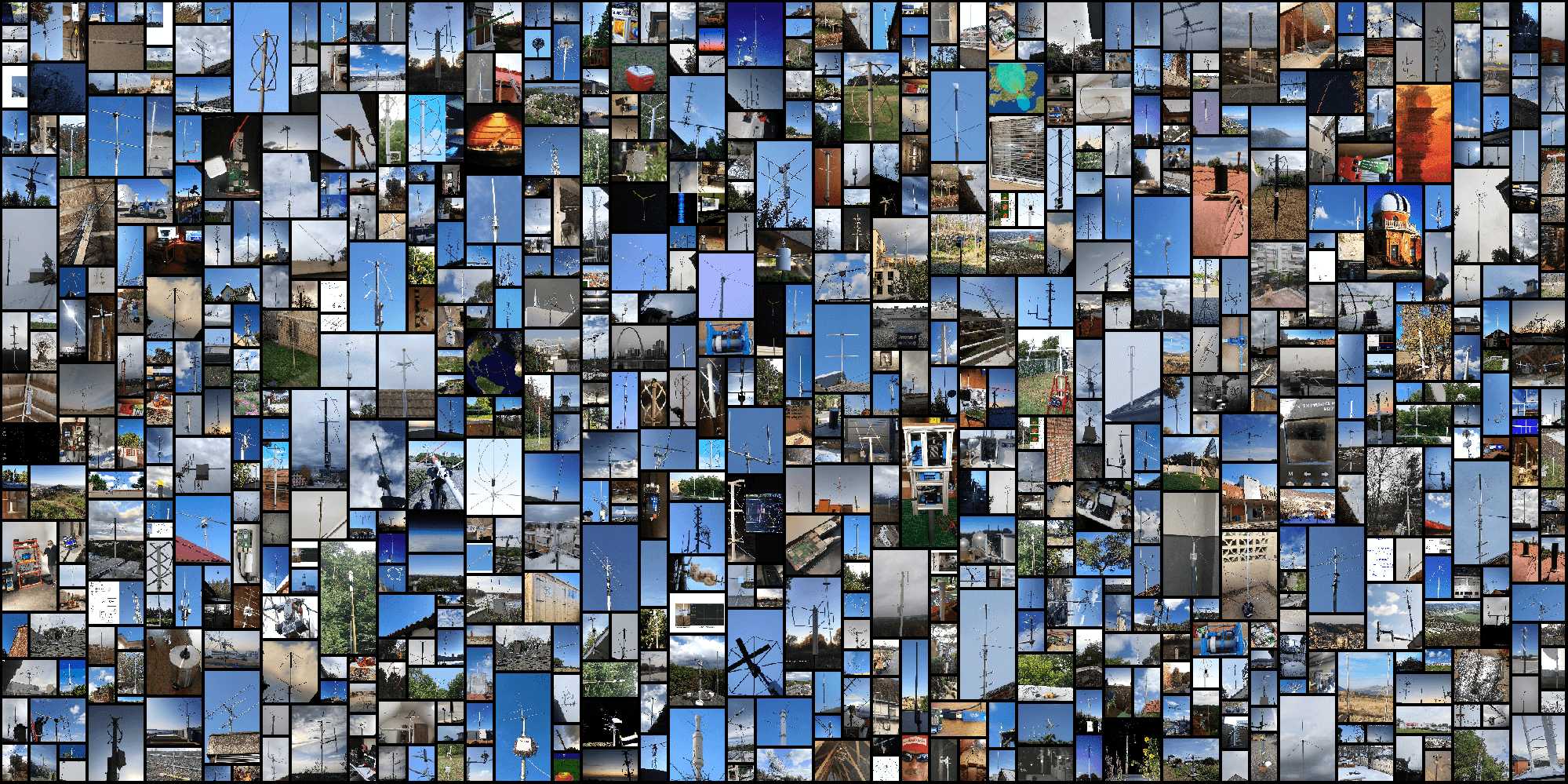
Ten years, in the open.
- 2015 Libre Space Foundation founded in Athens, Greece.
- 2017 UPSat deployed from the ISS — first end-to-end open-source satellite.
- 2021 QUBIK-1/2 and PICOBUS fly on Firefly Alpha FLTA001 (DREAM) maiden flight.
- 2022 QUBIK-3/4 and PICOBUS fly on Firefly Alpha FLTA002 (“To The Black”).
- 2024 SIDLOC-01 launches as a hosted payload on Ariane 6’s maiden flight (VA262).
- 2025-04 LSF moves into a new Athens headquarters with dedicated cleanroom and TVAC facilities.
- 2025-07 SatNOGS Network crosses 12 million observations.
- 2025-10 LSF hosts the 6th Open Source CubeSat Workshop (OSCW 2025) in Athens.
- 2025-11 PHASMA-LAMARR and PHASMA-DIRAC launched on SpaceX Falcon 9 Transporter-15 via Exolaunch.
- 2026-01 PHASMA first signals decoded by Dwingeloo and the SatNOGS Network.
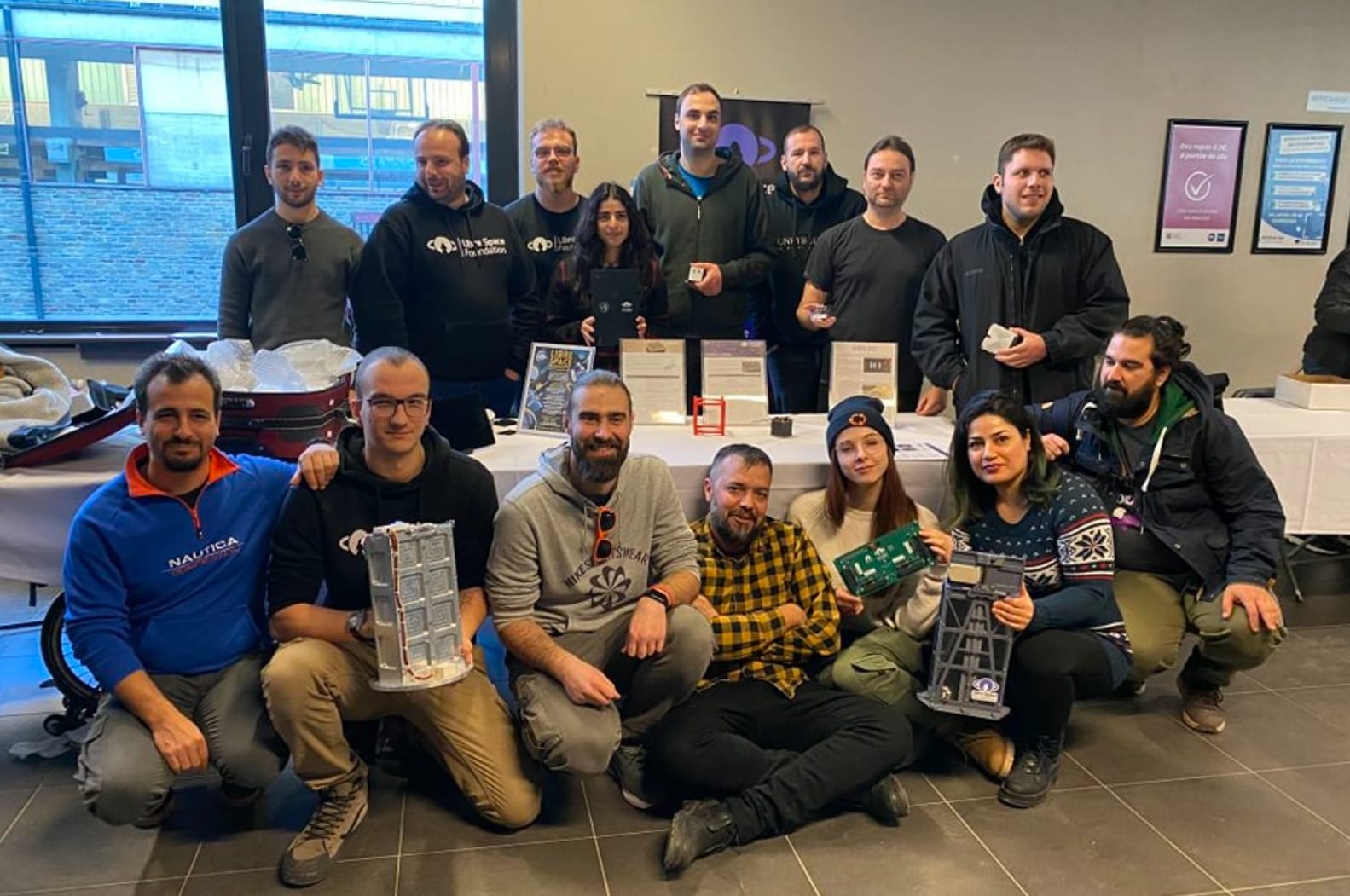
The crew on the ground.
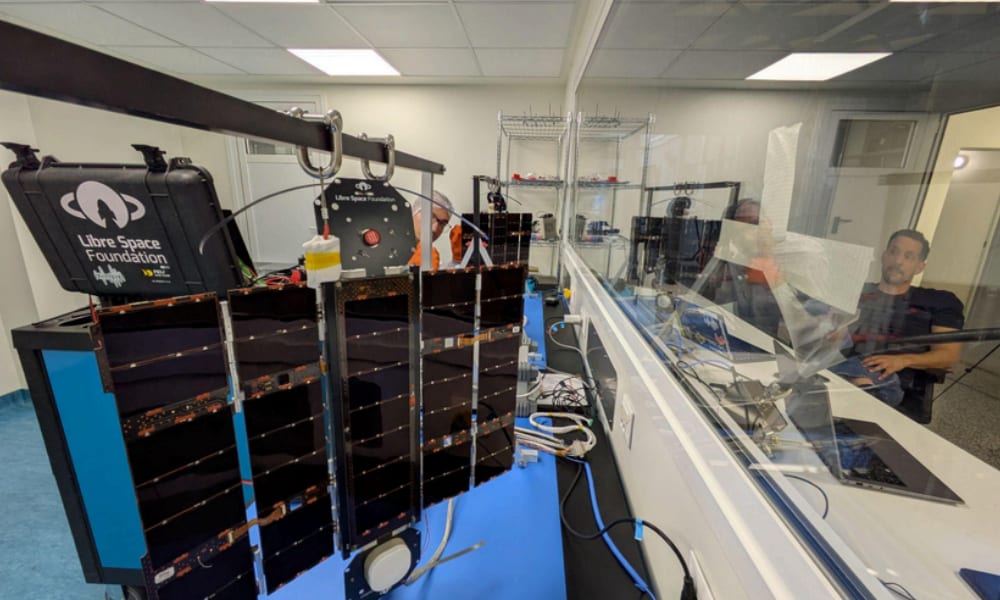
Cleanroom. Repos. Ground stations.
Since April 2025 our work happens at a dedicated Athens headquarters with a cleanroom and TVAC chamber — the rooms where PHASMA was integrated and where the next flight hardware is built. Alongside them run the usual rhythms: GitLab reviews, Matrix threads, Sunday solder sessions, the SatNOGS Network humming in the background.
Pull requests from strangers ship to orbit. Bug reports from amateurs fix production firmware. Students run the ground stations that track the spacecraft we build with them. That ratio — a small staff, a worldwide community — is the foundation.
Partners in the open.